
How Not to Install Tile - Tile America
November 10th, 2025



When we say from inspiration to reality, we mean it. A beautiful tile installation isn’t just a pretty surface — it’s a construction system. At Tile America, we’ve seen countless jobs where cutting corners (or hiring unqualified labor) leads to expensive, avoidable problems. The folks at CTEF (ceramictilefoundation.org) laid out a fantastic cautionary example, so let’s walk through the key fails — and how you can avoid them with the right products, the right team, and the right approach.
 1. Excessive Tile Lippage on Floors
In the example cited, the master bath floor exhibited large height differences between adjacent tiles (up to ¾″) — what the Tile Council of North America (TCNA) defines as “lippage.”
Why this matters: Uneven tiles lead to tripping hazards, aesthetic disappointment, grout cracking, and ultimately, callbacks.
How to guard against it:
Use a proper tile leveling system to keep adjacent tile faces flush. Check ou this guide: Leveling System Guide
Make sure the substrate is flat and the installer uses adequate mortar coverage and proper trowel technique.
At Tile America, we recommend specifying and purchasing (or supplying) leveling kits alongside the tile to ensure the installer uses them.
For larger format tiles, consider membranes that isolate substrate movement.
 2. Wall / Tub Surround Tile Was Not Set Straight
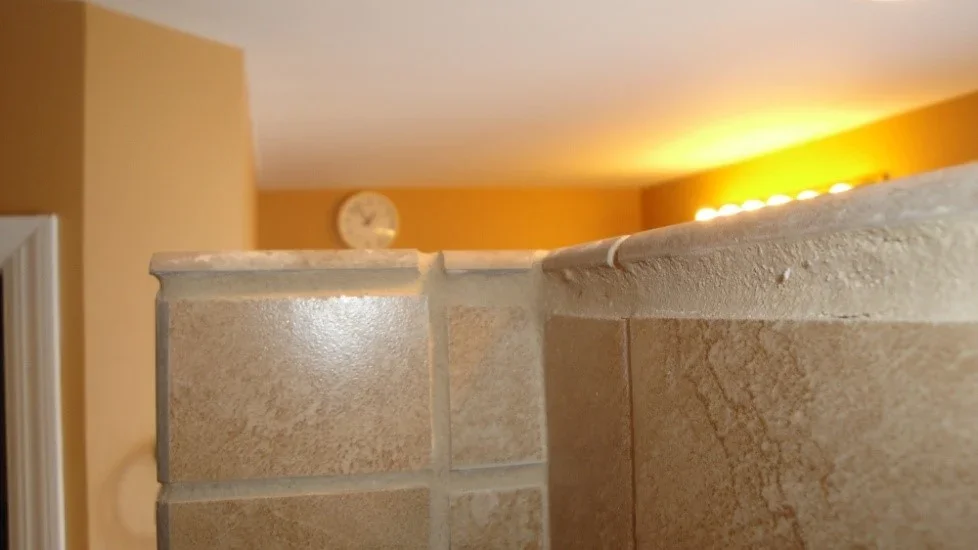
In the same installation, the tub surround and shower wall tile lacked alignment: inconsistent joint widths, tiles not set parallel/perpendicular, grout being used to compensate for poor layout.
Why this matters: Misalignment undermines the visual integrity of the installation, causes filler-grout gaps, and signals unprofessional work.
How to prevent this:
Enforce a layout review prior to setting tile: ensure the installer uses a laser or chalk lines, lays out full tile runs (not just tries to “make it fit”), and establishes consistent joint widths with proper spacer systems (again, leveling + spacing).
Consider using a full membrane system that gives the installer a predictable base for both wall and floor transitions (especially in wet areas). For example:
Schluter DITRA Uncoupling & Waterproofing Membrane – though often used on floors, when properly integrated can help in areas where substrate deflection or movement could compromise alignment or bonding.At Tile America, our consultants stress the “lay-out before you set” approach: tile mock-ups, spacers, leveling clips, and correct mortar technique.
 3. Improper Mortar Coverage + Missing Grout + Shower Pan Leaks
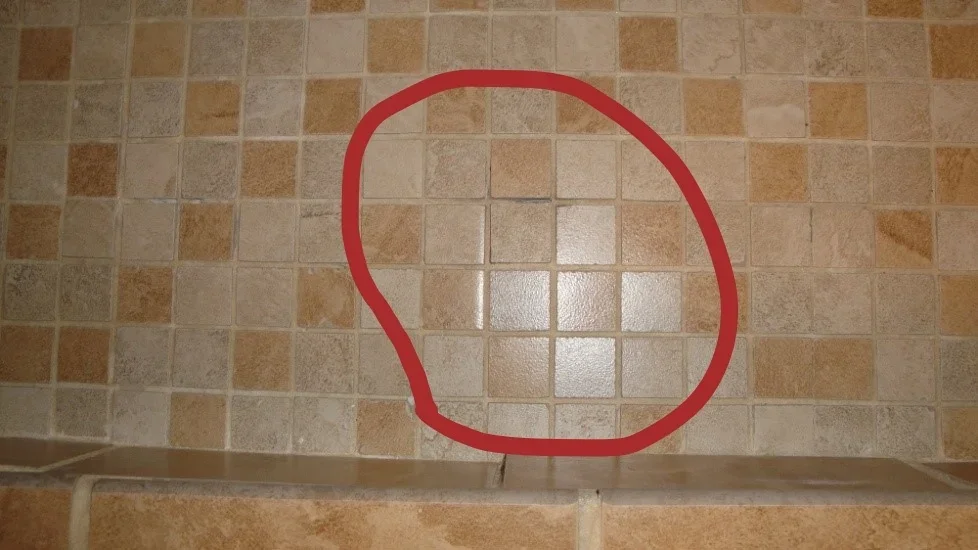
The CTEF article dug deeper: in their example, the floor had less than adequate mortar coverage (below the 80% dry-area / 95% wet-area benchmarks). The shower pan membrane was compromised (screws driven through it) and missing grout was observed.
Why this matters: Incomplete mortar coverage = hollow tiles = cracked tiles. Water intrusion behind tile = mold, rot, structural damage.
How to prevent this:
Specify an uncoupling + waterproof membrane system in wet zones (e.g., showers). The DITRA system handles uncoupling, and the companion: Schluter KERDI Waterproofing Membrane – a sheet-applied waterproofing/vapor retardant membrane for tile showers and wet walls.
Use the correct thin-set mortar: For example, the Schluter ALL-SET mortar (referenced on our trade page) was formulated specifically for use with these membranes.
Require installers to check and document mortar coverage: 80%+ in dry areas, 95%+ in wet areas; no voids within 2″ of corners for natural stone.
For the shower pan and wet wall assemblies: ensure the waterproof membrane is installed before the tile work begins, no screws or fasteners penetrate it, transitions are sealed, drains properly integrated.
Educate your trade customers (architects/designers/installers) that selecting high-quality products and using certified installers (e.g., those with CTI certification) is key. The article notes that qualified labor is central.
4. Why Hiring a Qualified Installer Matters
CTEF puts it bluntly: the problems shown resulted from work by “placers” without the knowledge, expertise or experience of a CTI (Certified Tile Installer). At Tile America we’ve seen the same pattern: even with premium tile and materials, if the labor is sub-par the job will fail.
Final Thoughts
At Tile America we believe that beautiful tile installs are built from the ground up — literally. A tile job that ‘looks’ great but lacks structural integrity is a false economy. The CTEF article provides a stark example of exactly how not to do it. But the solution is straightforward:
Pick the right system: uncoupling + waterproofing membranes when required.
Use proper tools: tile leveling systems, correct mortar, quality spacers.
Engage certified, experienced installers, follow ANSI/TCNA standards.
Inspect and verify each layer, from substrate to grout.

Categories
- Accessories
- CTEF Tile Tip
- Drains
- Floor Warming Systems
- Finishing, Edge Protection, Transitions, Profiles
- In the News
- Preparation
- Press Release
- Project Showcase
- Protect | Clean | Transform
- Setting Materials
- Shower systems
- Tile America Trade New Hire
- Tools
- Wall board materials
- Waterproofing & uncoupling membranes
- Outdoor Installations
- Commercial Projects
- Laticrete