
Pro Guide to Self Leveling Underlayments - Tile America
January 16th, 2026



 Pro Guide to Self-Leveling Underlayments
Smarter prep. Better results. Faster installs.
Let’s be real. When spring hits Connecticut, jobs stack up fast—and nothing kills momentum like fighting a bad substrate. Large-format tile demands dead-flat floors, and that’s why more pros across the state are turning to self-leveling underlayments to save time, protect margins, and keep customers happy.
This is the straight talk—no fluff—on what actually works.
Start Smart: Check the Substrate
Before you pour, slow down for five minutes—it will save you hours later.
Flatness matters. TCNA standards aren’t suggestions. Large-format tile requires no more than 1/8" variation in 10 feet. Old Hartford and New Haven homes weren’t built with that in mind.
Wood joists? Check the load. Self-levelers add weight quickly. Historic structures weren’t designed for an extra 1.6 lbs per sq. ft.—we’ve seen installers learn that lesson the hard way.
Moisture testing is non-negotiable. Especially in coastal areas. Skip this step and you’re gambling with the entire install.
This is working smarter—fix the problem before it costs you.
Pick Materials That Actually Work Here
Connecticut isn’t Florida. Your materials need to handle humidity, freezing temps, and seasonal movement.
Residential: 4,000–5,000 PSI
Strong enough for kitchens, baths, and living spaces without overbuilding or overspending.Commercial: 5,000–6,000 PSI
Built for retail, restaurants, and heavy traffic that take a beating.Rapid-set when time matters
Back to setting tile in 2–4 hours, not the next day. Faster turnarounds, happier customers.Freeze/thaw rated
Essential for entryways, mudrooms, and three-season rooms that see real winter temps.
Right product, right application—better results every time.
Pro Tip That Saves Hours
Mix your first bag about 10% drier than the instructions. Use it to pre-fill low spots and major dips. Then come back with your properly mixed pour.
You’ll use less material, chase the pour less, and end up with a flatter floor. Connecticut installers swear by this.
Products That Perform on CT Job Sites
We’ve seen these succeed:
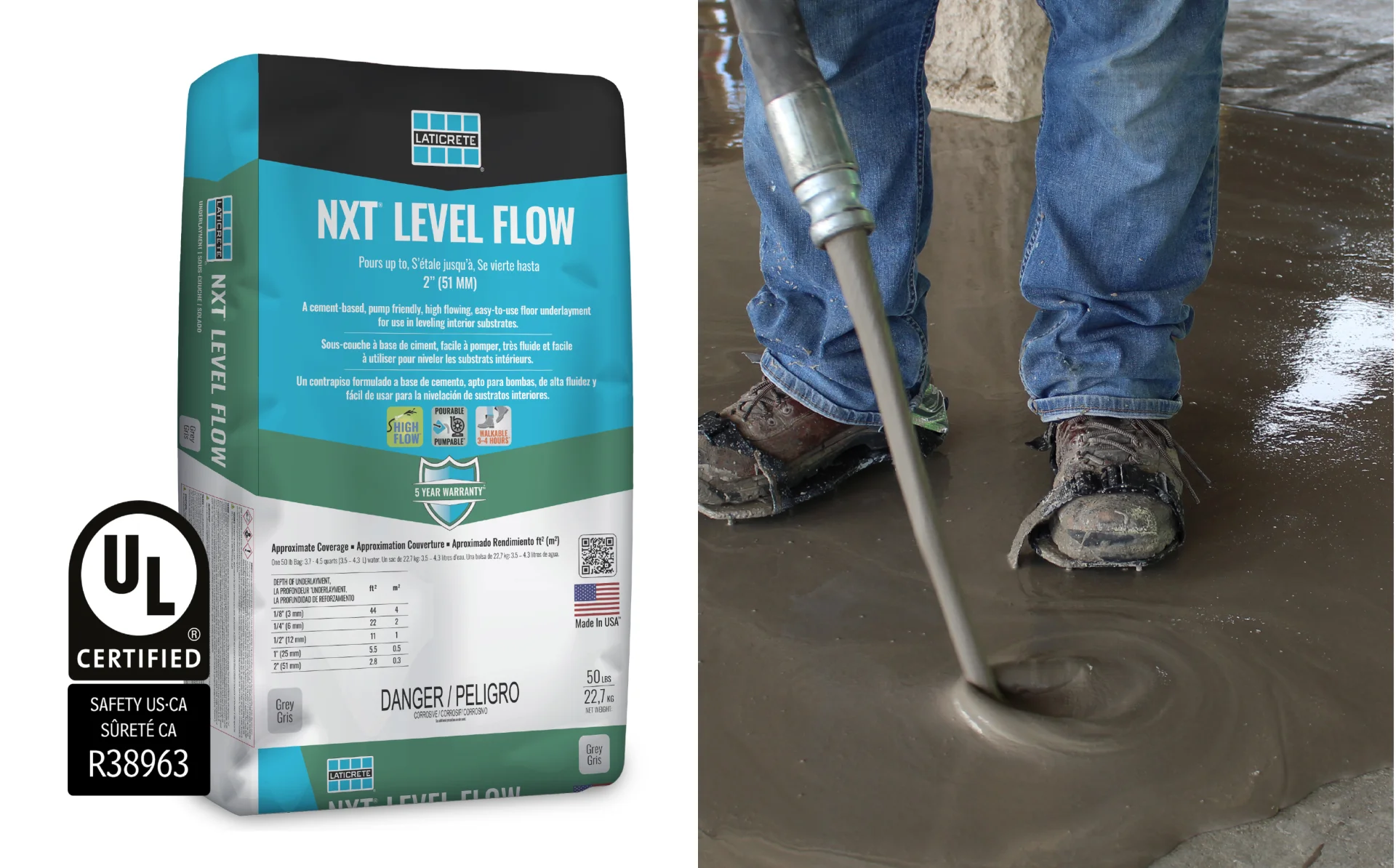
LATICRETE NXT Level Flow - 1/8" -2" in a single lift. Walkable in3-4 hours
MAPEI Novo 2 Plan - 4,200 PSI
MAPEI Ultraplan M20 Plus When deadlines are tight - quick setting.
Application Tips for Connecticut Weather
Use cold water (50°–60°F) in summer to extend working time
Pour before lunch to beat afternoon humidity
Keep substrate above 50°F in winter
Watch drafts during windy spring days—air movement will skin your pour fast
We’ve all seen how one mistake can ruin a good pour. Don’t be that guy.
After You Level - Finish Strong
A flat floor still needs the right mortar:
At our trade counters we offer different mortars with unique benefits depending on your project needs. Stop in and speak to our team about your project!
We help you choose the right system so you can install smarter, better, and faster - the first time.
Stop in, grab contractor pricing, and let’s get your next floor right from the start.

Categories
- Accessories
- CTEF Tile Tip
- Drains
- Floor Warming Systems
- Finishing, Edge Protection, Transitions, Profiles
- In the News
- Preparation
- Press Release
- Project Showcase
- Protect | Clean | Transform
- Setting Materials
- Shower systems
- Tile America Trade New Hire
- Tools
- Wall board materials
- Waterproofing & uncoupling membranes
- Outdoor Installations
- Commercial Projects
- Laticrete