
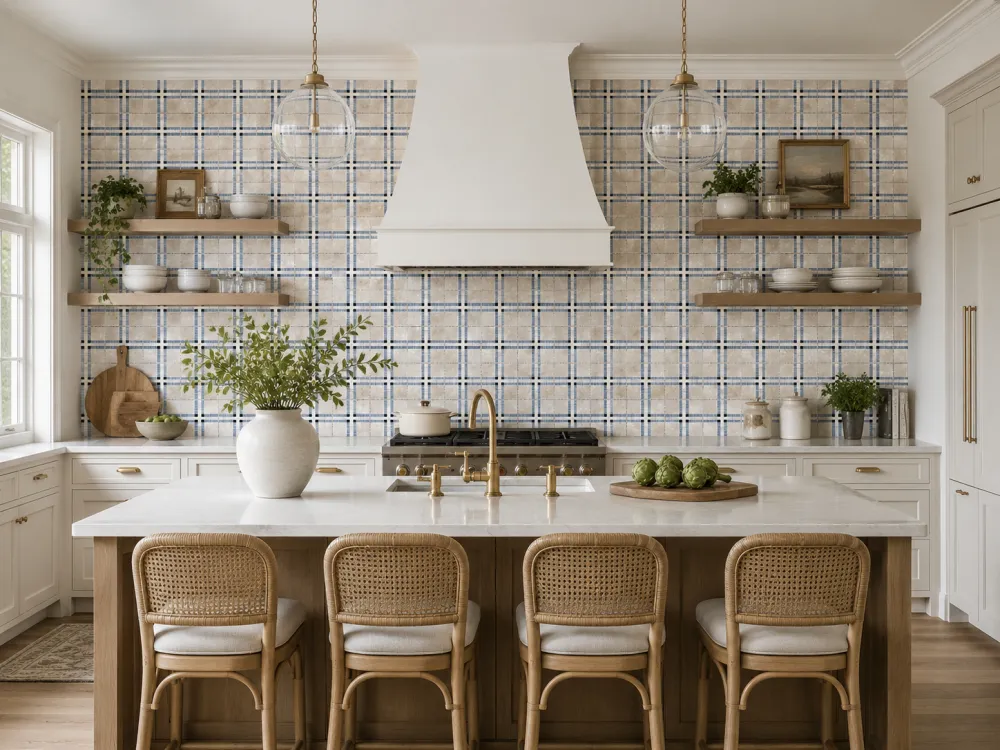
Plaids: A Classic Look, Reinvented in Tile
September 1st, 2026



Some patterns never really disappear. They evolve.
Plaid is one of those enduring design motifs that continually finds its way back into interiors — sometimes traditional, sometimes tailored, and sometimes completely unexpected. Today, plaid is experiencing a fresh revival, appearing across design publications, social media and new tile collections in ways that feel sophisticated, architectural and remarkably current.
From natural stone combinations to intricately assembled mosaics, this familiar pattern is taking on an entirely new dimension in tile.
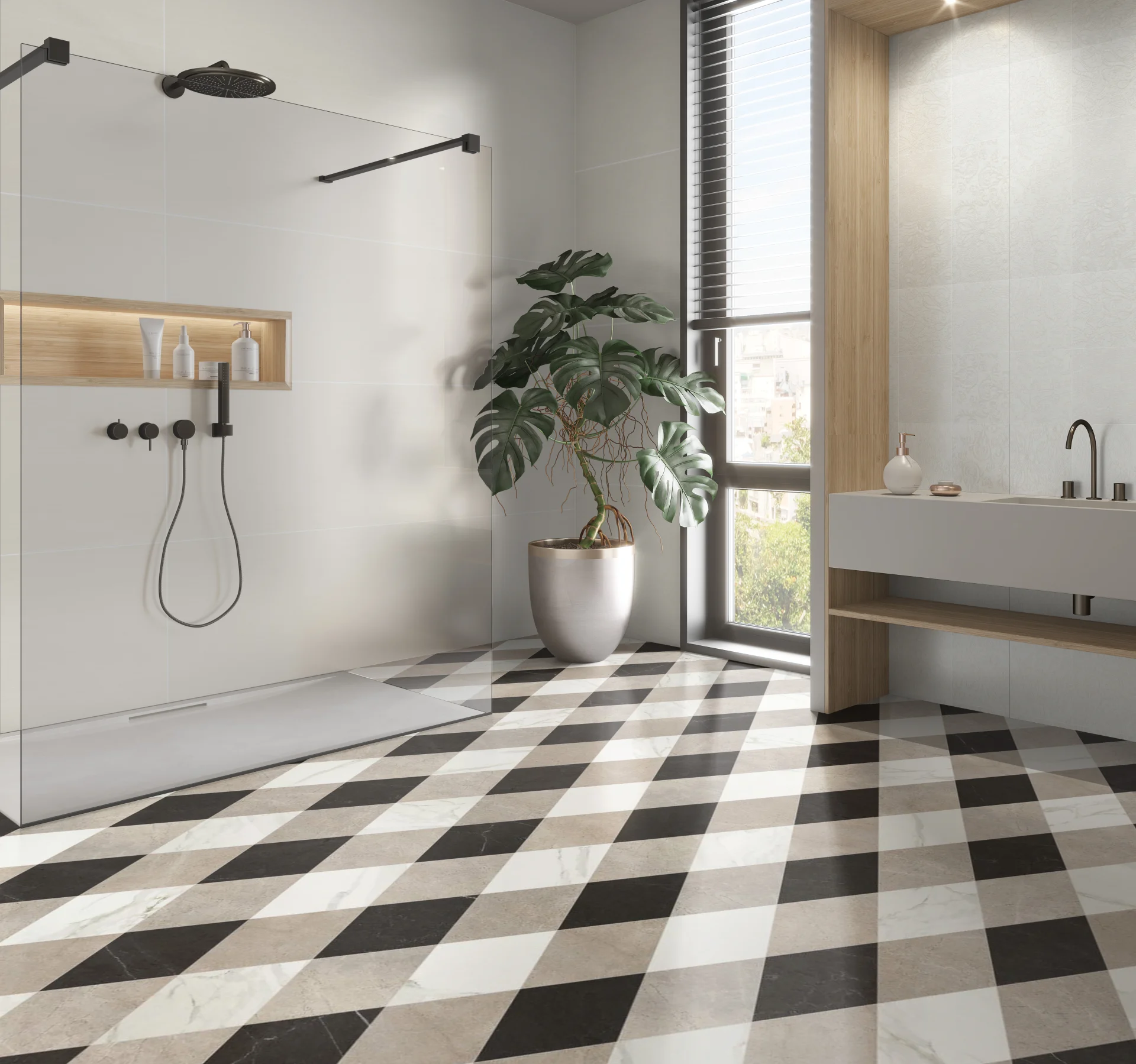 Why We Love the Plaid Trend
Plaid carries an unmistakable sense of heritage.
Its aesthetic draws from classic Ivy League prep, English country interiors and the understated elegance associated with an “old money” sensibility. It feels established without feeling overly formal — a balance that makes it especially appealing for today’s interiors.
Translated into tile, plaid becomes even more interesting.
Instead of relying on fabric, color and thread, the pattern is created through stone, scale, texture and tonal contrast. The result can range from subtle and quietly sophisticated to bold enough to become the defining feature of a room.
It is a perfect example of how a traditional design language can feel completely new when interpreted through another material.
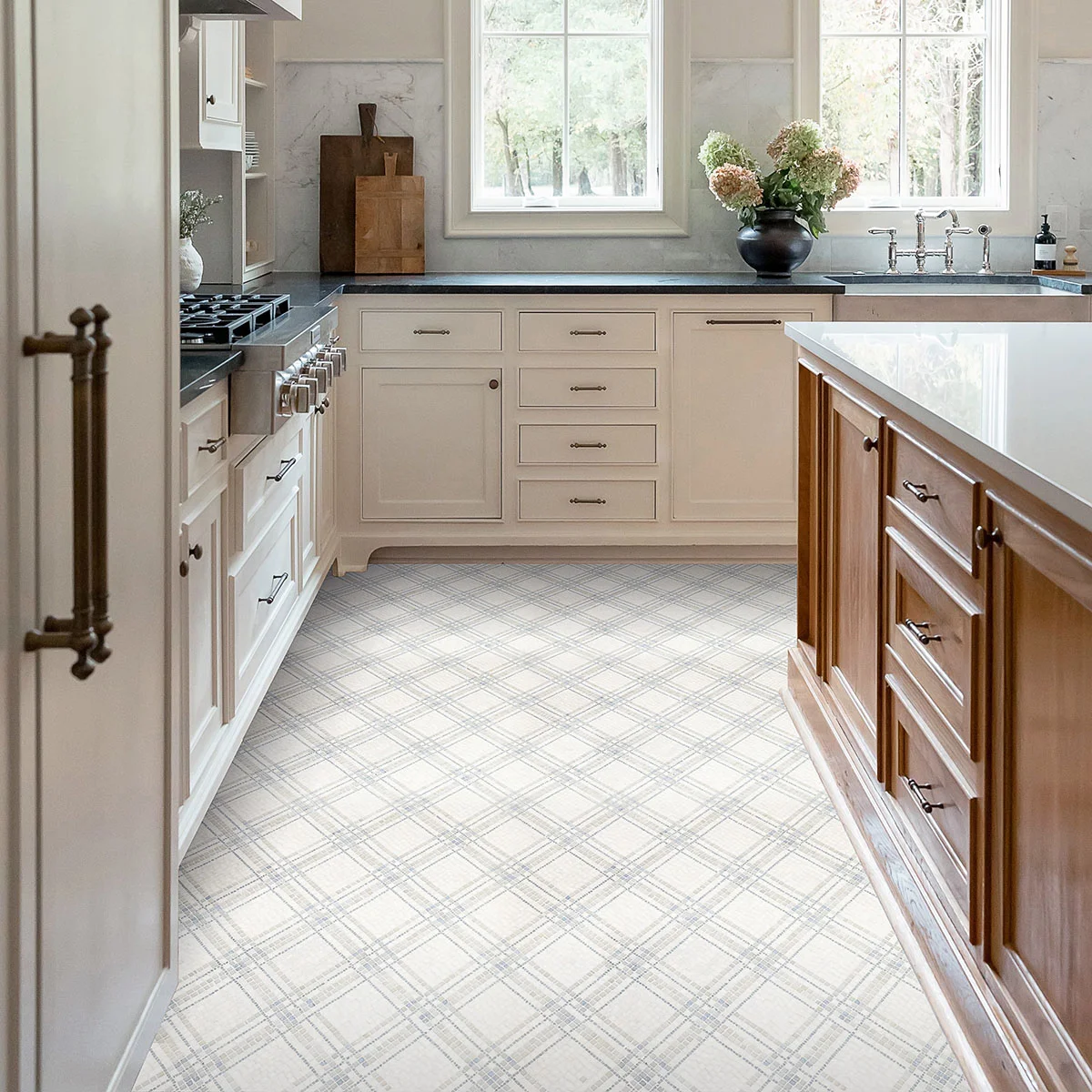 Onyx France Plaid Mosaic
A beautiful example of this evolution is the Onyx France Plaid Mosaic, where the structure of a traditional plaid is recreated through stone.
The intersecting lines, tonal variation and natural movement of the material give the pattern depth while keeping the overall look elegant and refined.
It feels familiar — but far from predictable.
Explore the Onyx France Plaid collection
A New Take on a Timeless Classic
One of the things we find most exciting about this trend is the variety of interpretations now available.
Plaid can be oversized and architectural, soft and tonal, richly detailed or scaled down into an intricate mosaic. Depending on the material and color palette, the same basic design principle can feel traditional, modern, European, rustic or distinctly American.
Here are several interpretations worth taking a closer look at.
 Cosa: Three-Stone Plaid Gingham
Cosa takes a beautifully layered approach to plaid by combining three different natural stones to create a sophisticated gingham-inspired pattern.
The secret is surprisingly simple.
By selecting three modular stones in related light, medium and dark values and alternating every other row, the individual pieces begin to visually overlap. The result creates the illusion of a woven plaid.
It is a clever design technique that transforms relatively simple shapes into something that looks highly customized.
This approach is particularly appealing for designers because the concept can be adapted through material selection. Soft creams and taupes can create a quiet, tonal interpretation, while stronger contrast can make the plaid far more graphic.
The possibilities are almost endless.
Explore Cosa’s Maxwell plaid designs
 Jerusalem Heights Mini Mosaic Safari Plaid
For a smaller-scale interpretation, the Jerusalem Heights Mini Mosaic Safari Plaid brings the same classic influence into a more intricate format.
The reduced scale gives the pattern additional texture and detail, making it especially well suited for areas where you want the surface to be appreciated up close.
Think powder room floors, shower niches, decorative borders, bar backsplashes or other spaces where a small amount of pattern can deliver a major design moment.
It is proof that plaid does not need to be oversized to make an impact.
Explore Jerusalem Heights Mini Mosaic Safari Plaid
 Jerusalem Heights: A Burberry-Inspired Plaid
Some plaid patterns are immediately recognizable.
Jerusalem Heights offers interpretations reminiscent of the iconic Burberry-style plaid — a combination that feels both fashionable and deeply rooted in tradition.
The intersecting lines create a stronger graphic statement, while the natural stone materials soften the pattern and give it an artisanal quality.
This is where fashion and interior design intersect beautifully.
Used thoughtfully, the pattern can introduce a sense of tailored sophistication into an interior without becoming overly thematic. It could feel equally at home in an elegant primary bathroom, a dramatic entryway or a beautifully appointed dressing area.
Explore Jerusalem Heights Paris
Explore Jerusalem Heights Le Havre
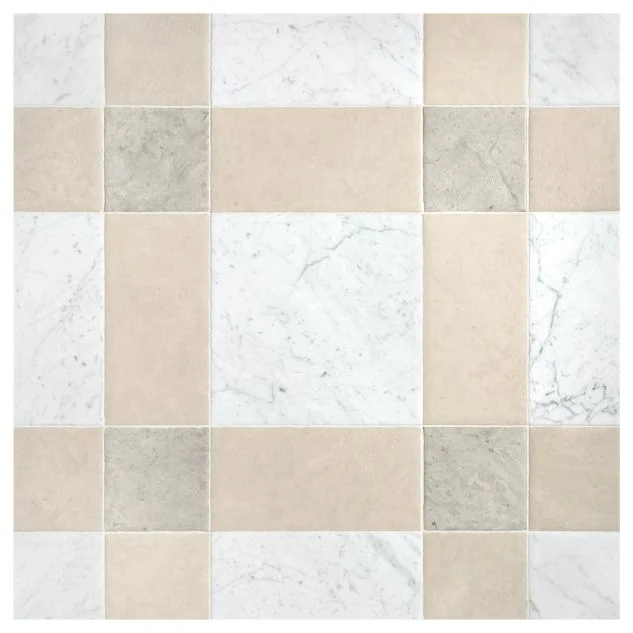 Terra Bella Chateau: A Parisian Interpretation
The Terra Bella Chateau collection offers yet another perspective on plaid, demonstrating just how versatile this design language can be.
Its combination of Italian Carrara marble, warm beige and soft grey stone creates a layered, European-inspired palette that feels collected rather than coordinated.
The result has an almost architectural quality — classic enough to feel timeless, yet distinctive enough to become a focal point within the room.
It also highlights one of the most compelling aspects of plaid in tile: changing the stone changes the personality of the pattern.
A plaid created in black and white feels graphic and contemporary.
One composed of limestone, marble and warm neutral stone feels softer and more historic.
The geometry may remain similar, but the design experience can be completely different.
Explore Terra Bella’s Chateau Lyon Parisian Plaid
 Where Plaid Tile Works Best
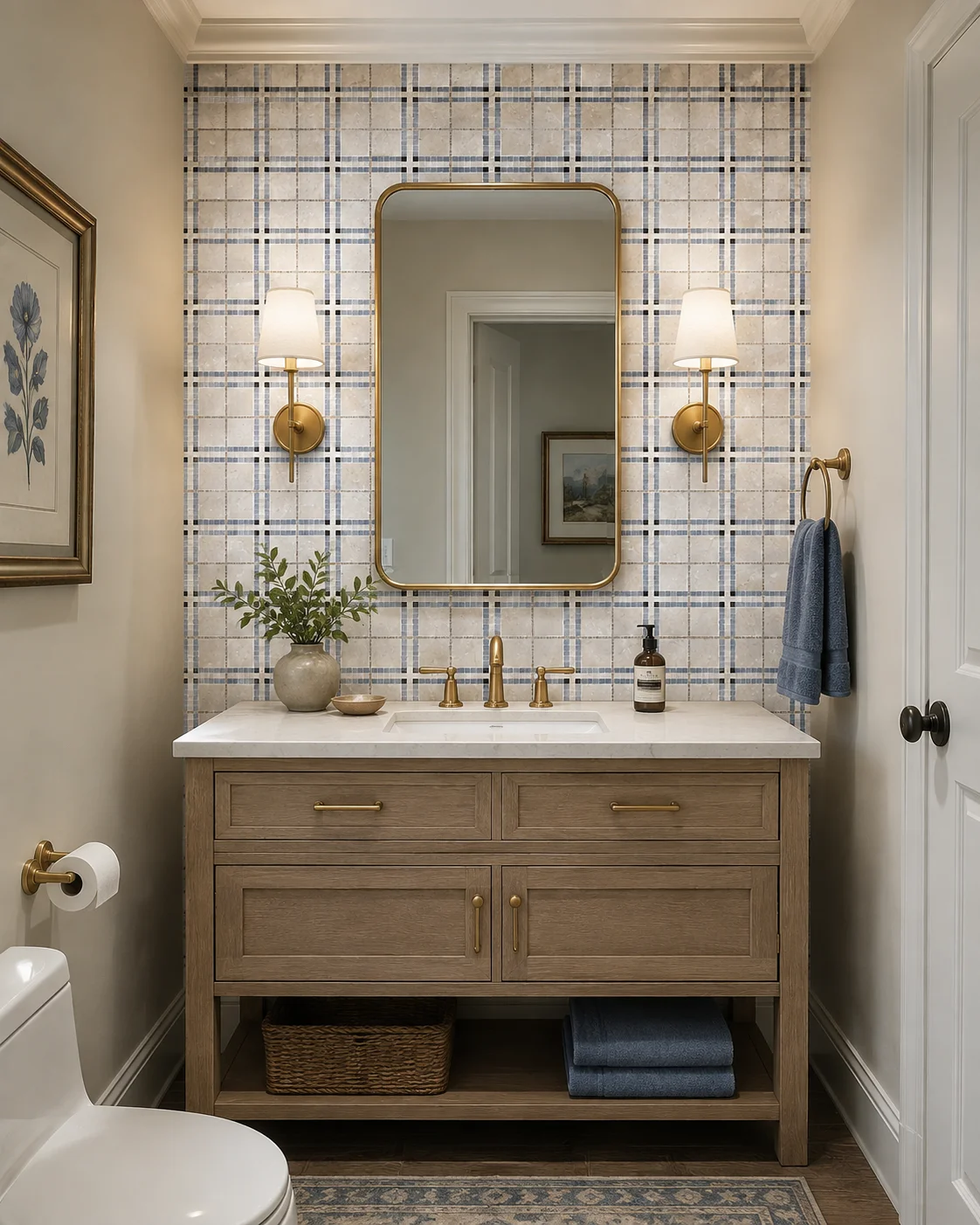
A plaid mosaic can transform a powder room floor into a design feature. A larger-scale stone pattern can define an entryway or foyer. In a bathroom, plaid can bring unexpected character to a shower floor, niche or feature wall.
It can also be especially effective when surrounded by quieter materials.
Pair an intricate plaid mosaic with large-format stone.
Allow a patterned floor to sit beneath simple cabinetry.
Use a sophisticated plaid as the one element that gives an otherwise restrained interior personality.
The contrast between pattern and simplicity is often what makes the design feel elevated.
More Than a Trend
Plaid may be having a moment, but its longevity is exactly what makes it appealing.
Unlike patterns that are closely tied to a particular design era, plaid has been reinterpreted for generations. Its familiarity gives it staying power, while new materials and scales allow designers to continuously reinvent it.
That combination — heritage and innovation — is what makes plaid particularly exciting in tile.
It feels nostalgic without feeling dated.
Classic without feeling conventional.
And in the right space, completely unexpected.
Inspired to Explore the Look?
At Tile America, we are constantly looking for materials and ideas that allow our customers and design partners to create spaces that feel distinctive and personal.
If the new generation of plaid has caught your attention, visit one of our seven Connecticut showrooms. Our design consultants can help you explore natural stone, mosaics, patterns and material combinations — and find the interpretation that works beautifully for your project.
Tile America — Where Inspiration Surfaces.